
Templates
Brand & Positioning
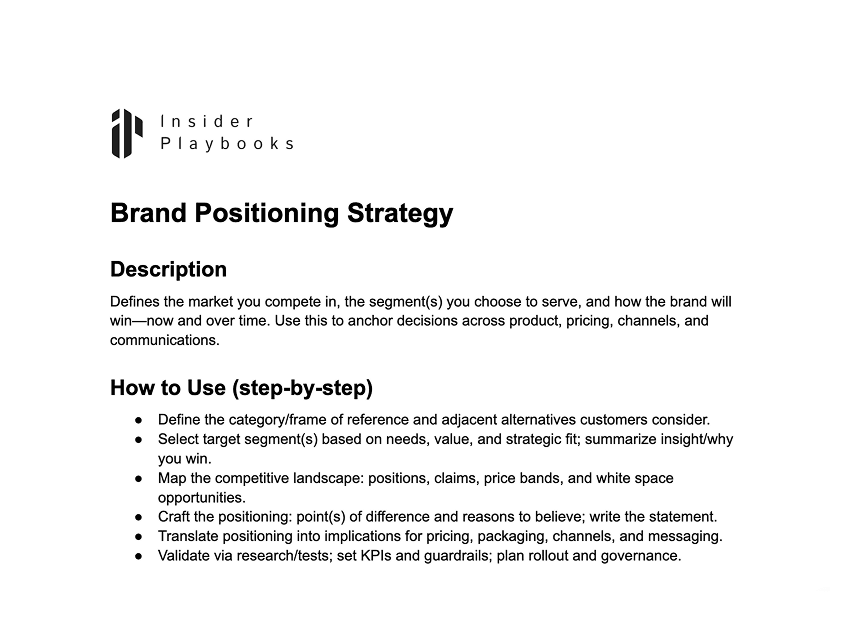
Defines the market you compete in, the segment(s) you choose to serve, and how the brand will win—now and over time. Use this to anchor decisions across product, pricing, channels, and communications.
View Template
Brand & Positioning
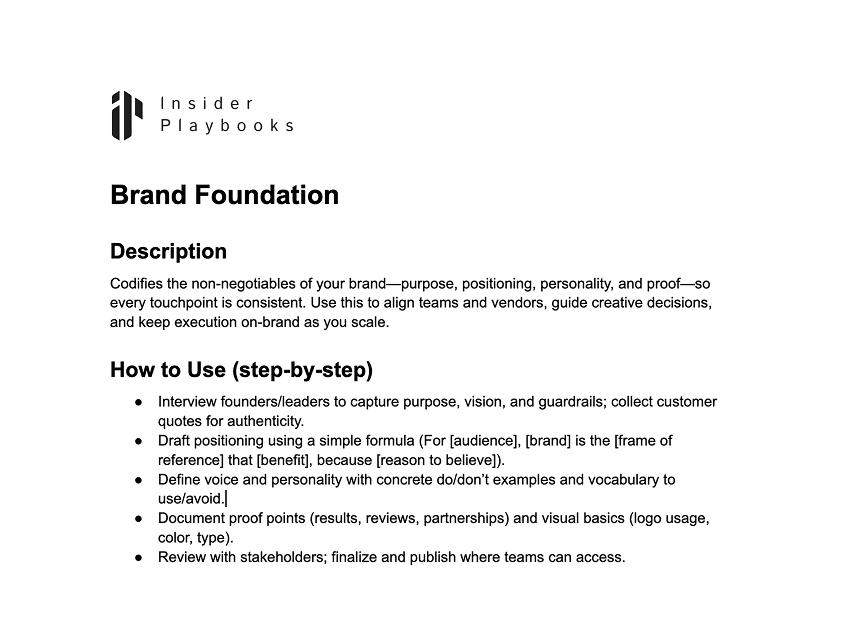
Codifies the non-negotiables of your brand—purpose, positioning, personality, and proof—so every touchpoint is consistent. Use this to align teams and vendors, guide creative decisions, and keep execution on-brand.
View Template
Brand & Positioning
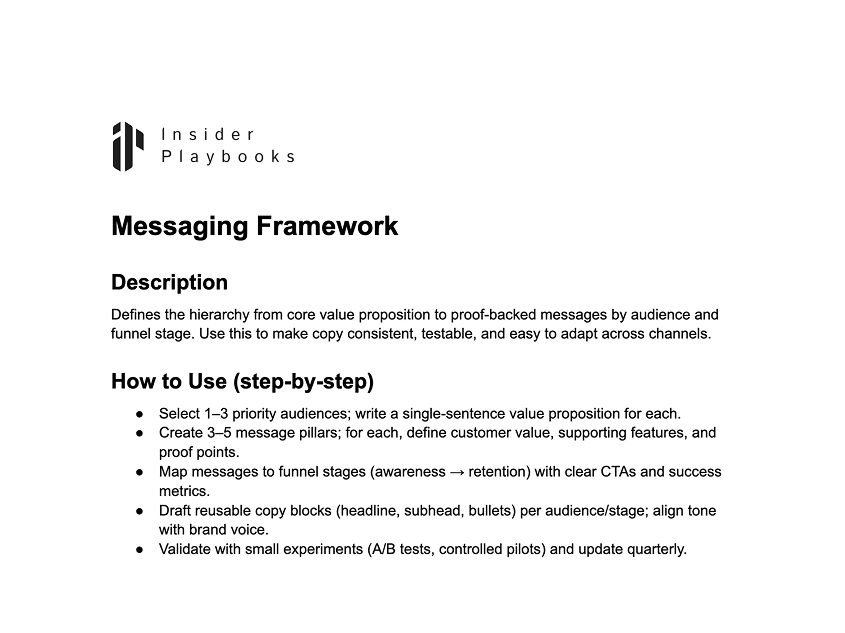
Defines the hierarchy from core value proposition to proof-backed messages by audience and funnel stage. Use this to make copy consistent, testable, and easy to adapt across channels.
View Template
Brand & Positioning
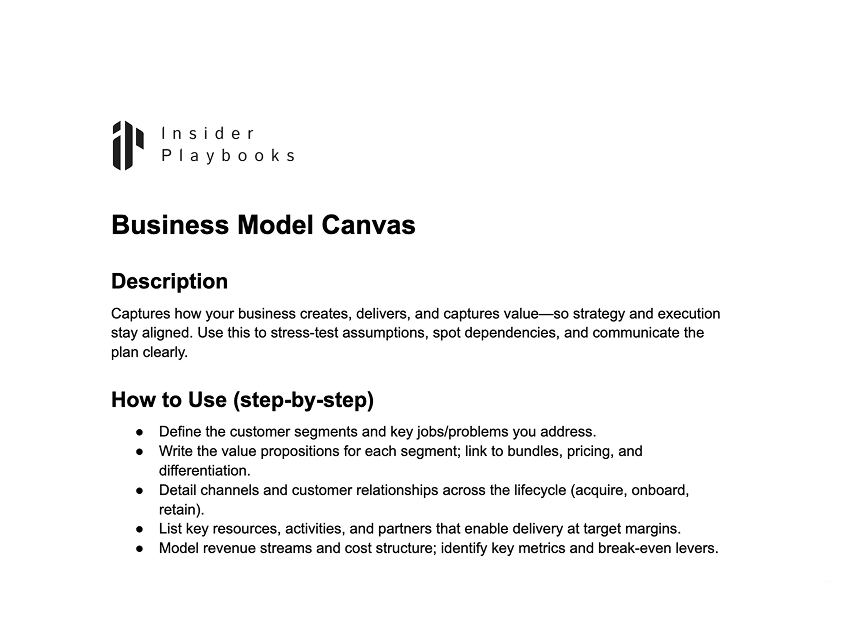
Captures how your business creates, delivers, and captures value—so strategy and execution stay aligned. Use this to stress-test assumptions, spot dependencies, and communicate the plan clearly.
View Template
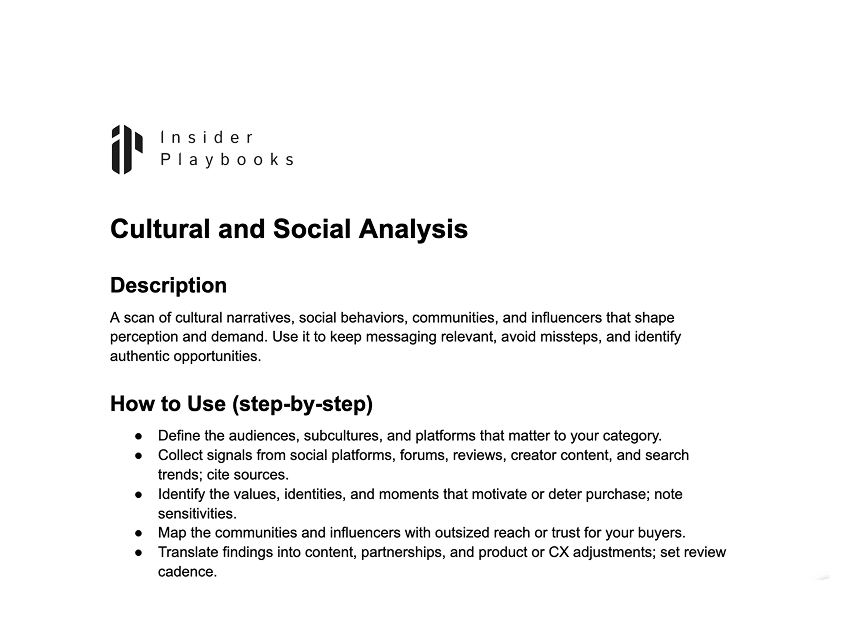
Business & Market Analysis
A scan of cultural narratives, social behaviors, communities, and influencers that shape perception and demand. Use it to keep messaging relevant, avoid missteps, and identify authentic opportunities.
View Template
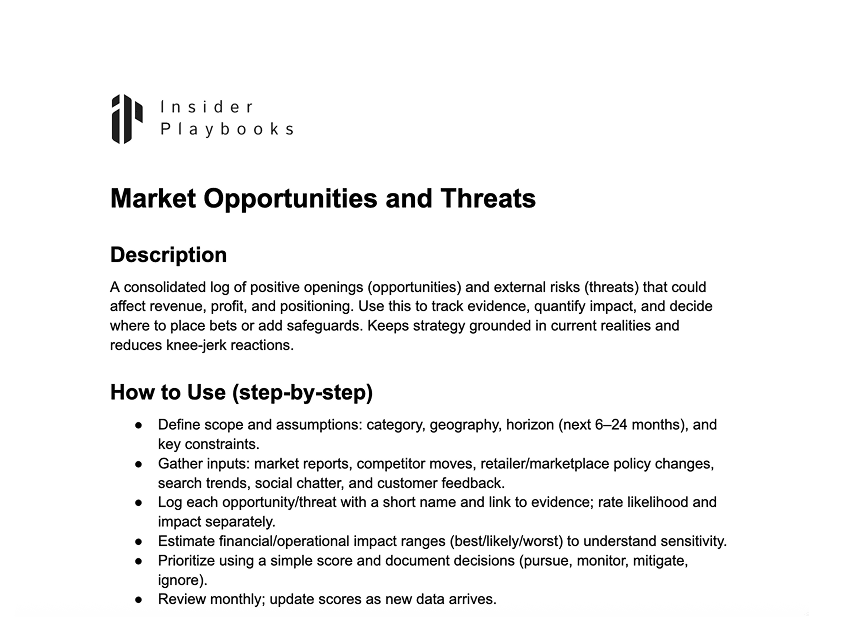
Business & Market Analysis
A consolidated log of positive openings (opportunities) and external risks (threats) that could affect revenue, profit, and positioning. Use this to track evidence, quantify impact, and decide where to place bets or add safeguards. Keeps strategy grounded in current realities and reduces knee‑jerk reactions.
View Template
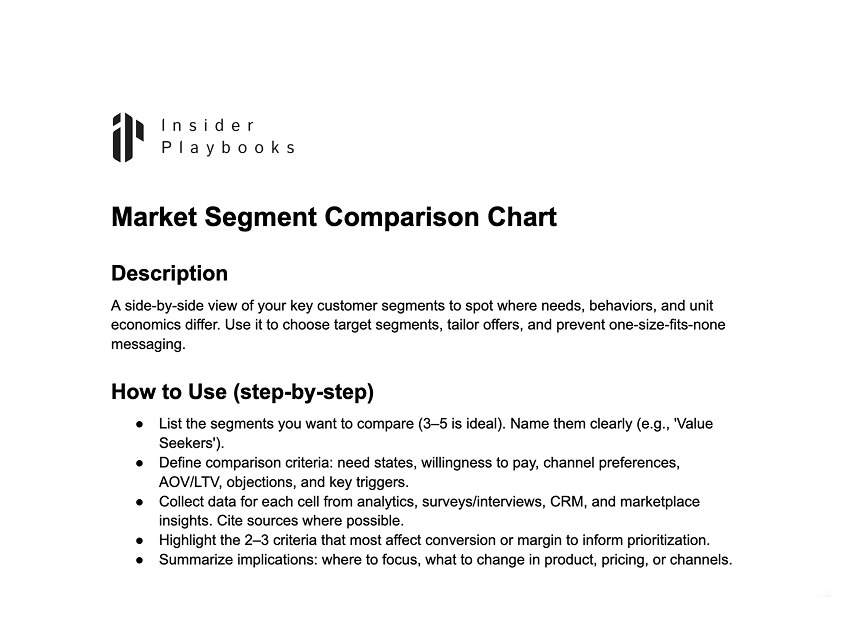
Business & Market Analysis
A side‑by‑side view of your key customer segments to spot where needs, behaviors, and unit economics differ. Use it to choose target segments, tailor offers, and prevent one‑size‑fits‑none messaging.
View Template
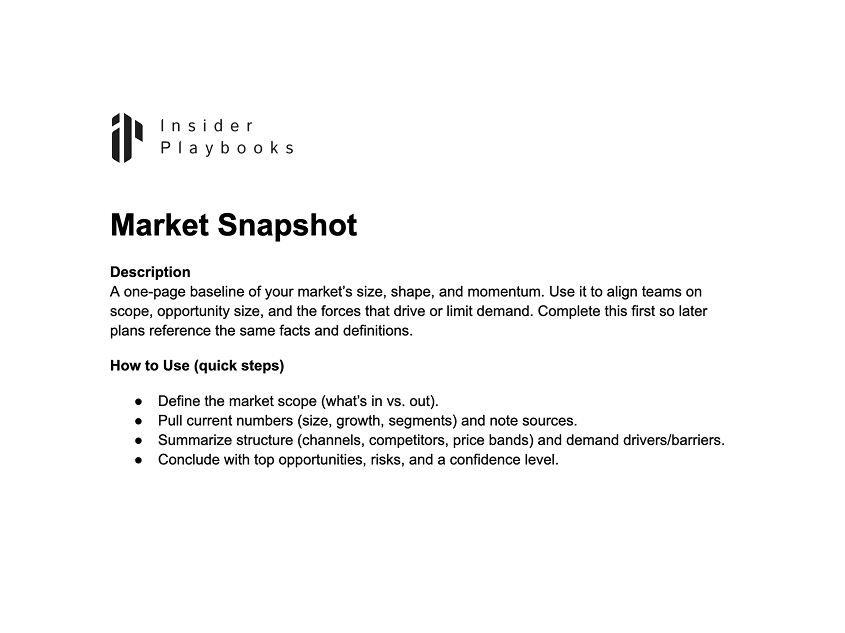
Business & Market Analysis
A one-page baseline of your market’s size, shape, and momentum. Use it to align teams on scope, opportunity size, and the forces that drive or limit demand. Complete this first so later plans reference the same facts and definitions.
View Template
Business & Market Analysis
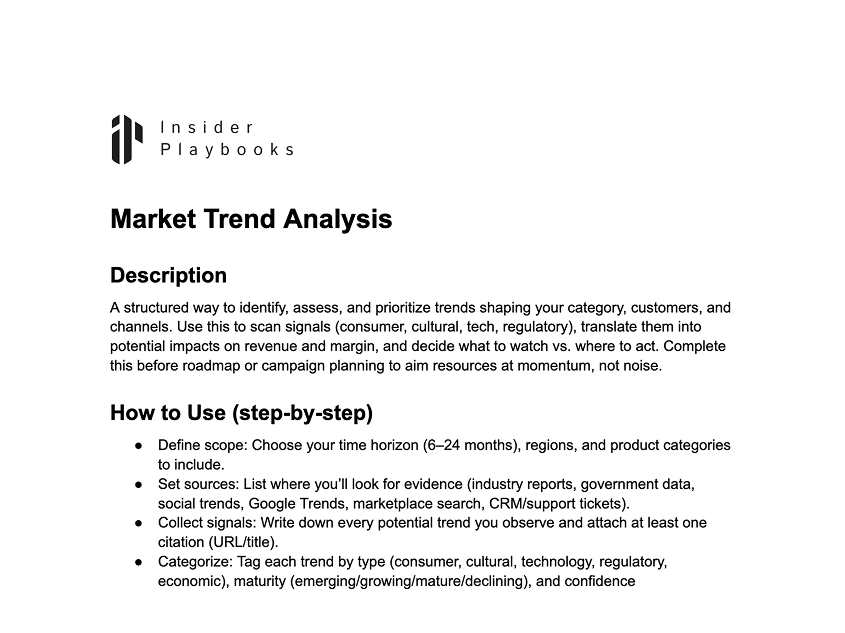
A structured way to identify, assess, and prioritize trends shaping your category, customers, and channels. Use this to scan signals (consumer, cultural, tech, regulatory), translate them into potential impacts on revenue and margin, and decide what to watch vs. where to act. Complete this before roadmap or campaign planning to aim resources at momentum, not noise.
View Template
Business & Market Analysis
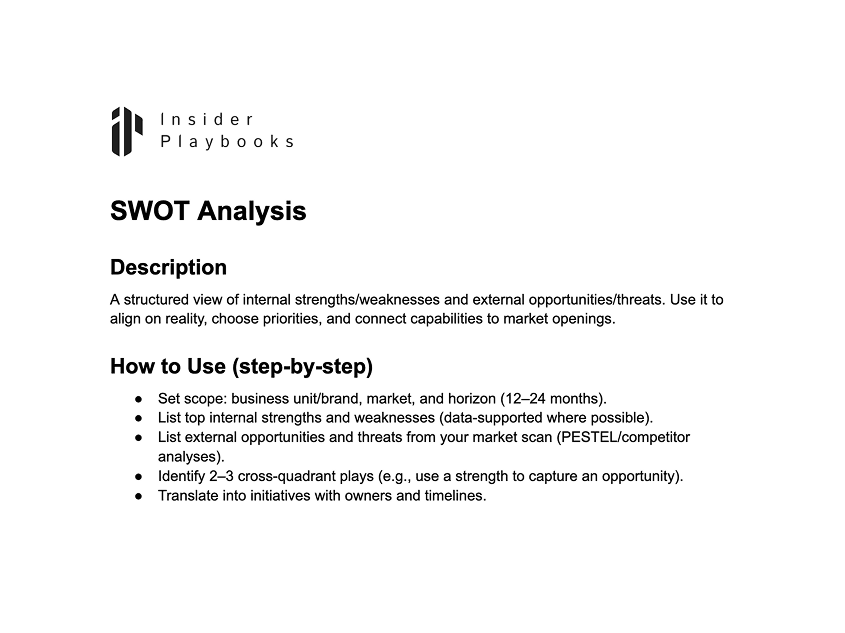
A structured view of internal strengths/weaknesses and external opportunities/threats. Use it to align on reality, choose priorities, and connect capabilities to market openings.
View Template
Business & Market Analysis
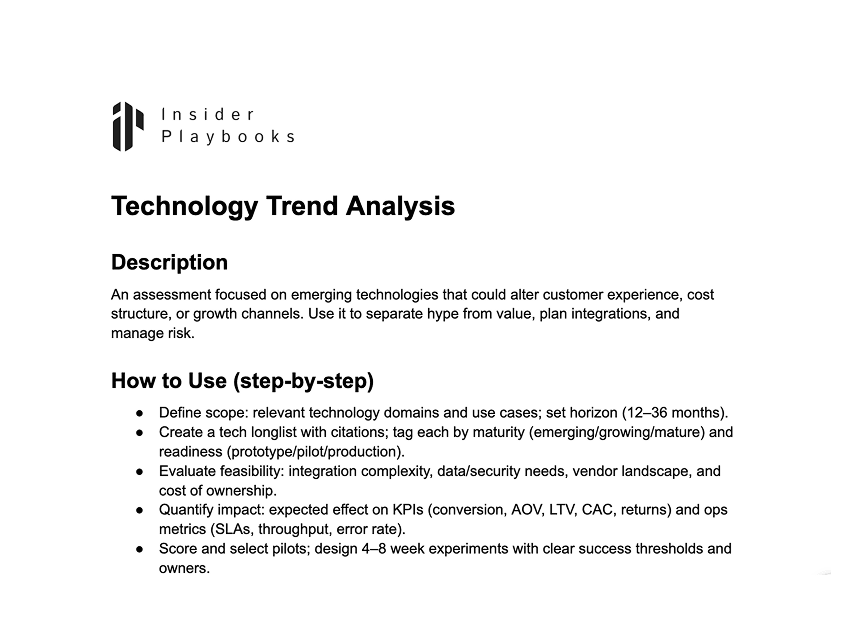
An assessment focused on emerging technologies that could alter customer experience, cost structure, or growth channels. Use it to separate hype from value, plan integrations, and manage risk.
View Template
Channel Strategies
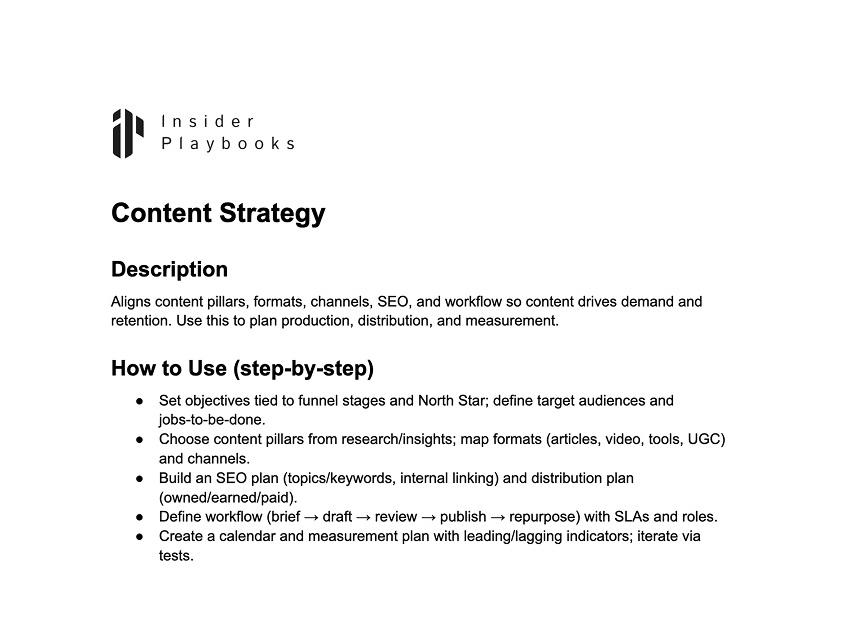
Aligns content pillars, formats, channels, SEO, and workflow so content drives demand and retention. Use this to plan production, distribution, and measurement.
View Template
Channel Strategies
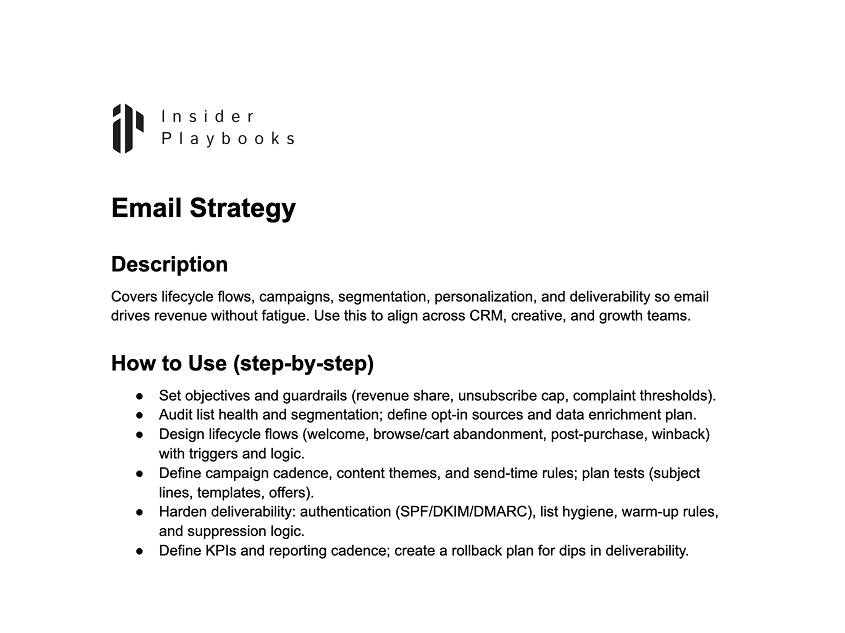
Covers lifecycle flows, campaigns, segmentation, personalization, and deliverability so email drives revenue without fatigue. Use this to align across CRM, creative, and growth teams.
View Template
Channel Strategies
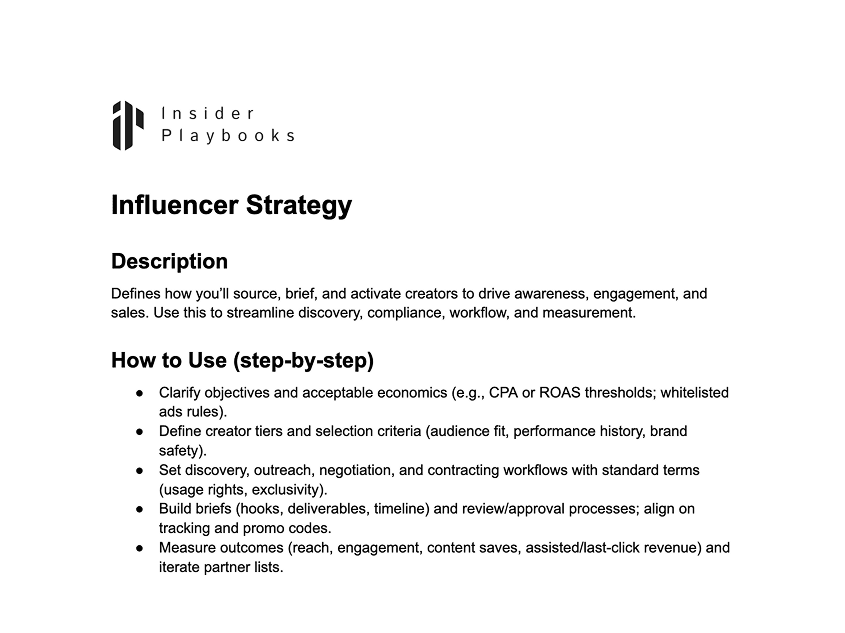
Defines how you’ll source, brief, and activate creators to drive awareness, engagement, and sales. Use this to streamline discovery, compliance, workflow, and measurement.
View Template
Channel Strategies
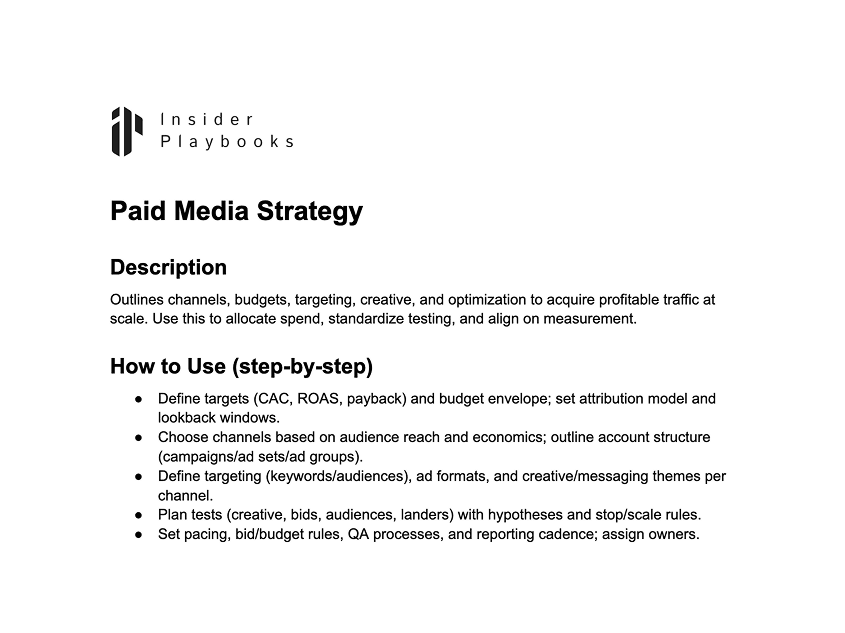
Outlines channels, budgets, targeting, creative, and optimization to acquire profitable traffic at scale. Use this to allocate spend, standardize testing, and align on measurement.
View Template
Channel Strategies
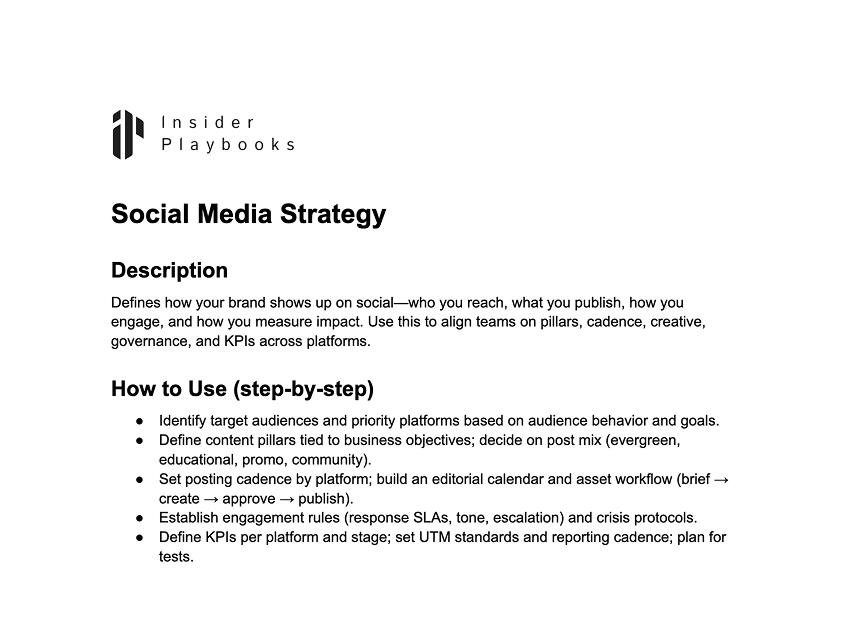
Defines how your brand shows up on social—who you reach, what you publish, how you engage, and how you measure impact. Use this to align teams on pillars, cadence, creative, governance, and KPIs across platforms.
View Template
Competitive Analysis
Tracks competitor moves and market signals to surface exploitable openings (opportunities) and external risks (threats). Use this to decide where to attack, defend, or ignore—with clear evidence, scoring, and counter-plays.
View Template
Competitive Analysis
Side-by-side snapshot of core competitor identity details—company facts, positioning, pricing bands, channels, policies, and signals—so teams can quickly align on who’s who and where to differentiate. Use this to brief stakeholders, stress-test your positioning, and keep watchlists current.
View Template
Competitive Analysis
Side-by-side comparison of competitors’ value propositions—including claims, features, proof, pricing, and CX—to reveal differentiators, parity, and white space. Use it to refine your positioning and offers.
View Template
Customer Research
Visualizes how customers progress from awareness to loyalty, including goals, actions, emotions, friction, and KPIs. Use it to spot drop-offs and design targeted fixes.
View Template
Customer Research
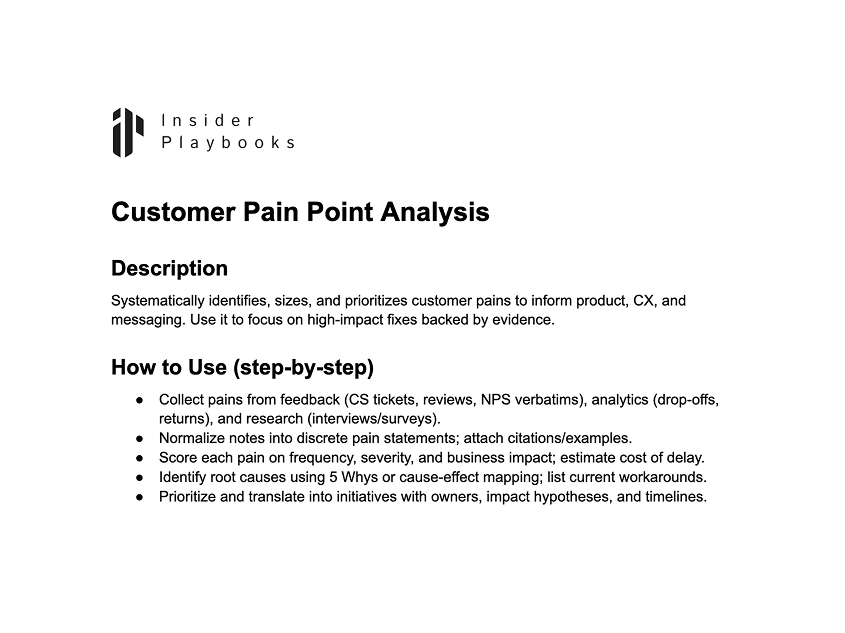
Systematically identifies, sizes, and prioritizes customer pains to inform product, CX, and messaging. Use it to focus on high-impact fixes backed by evidence.
View Template
Customer Research
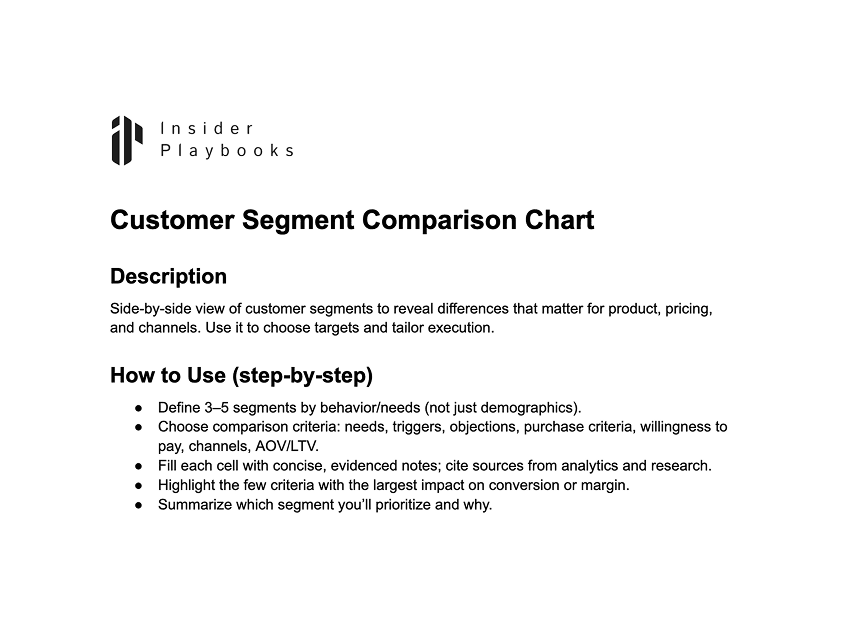
Side-by-side view of customer segments to reveal differences that matter for product, pricing, and channels. Use it to choose targets and tailor execution.
View Template
Customer Research
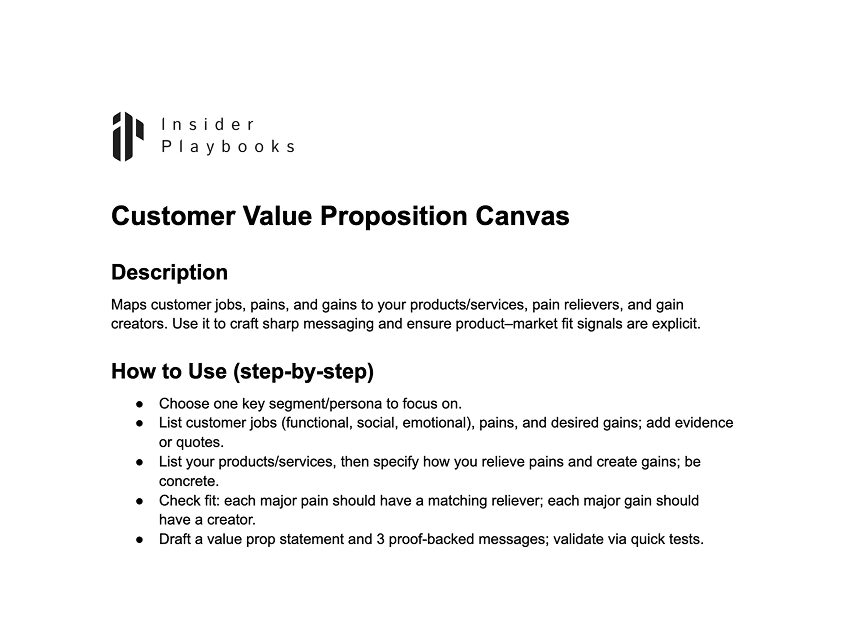
Maps customer jobs, pains, and gains to your products/services, pain relievers, and gain creators. Use it to craft sharp messaging and ensure product–market fit signals are explicit.
View Template
Customer Research
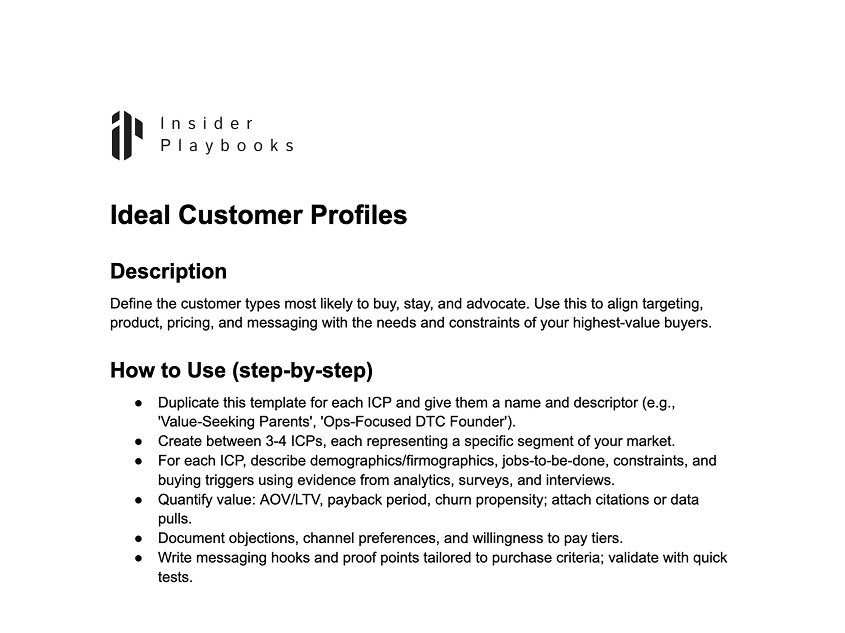
Define the customer types most likely to buy, stay, and advocate. Use this to align targeting, product, pricing, and messaging with the needs and constraints of your highest-value buyers.
View Template
Marketing & Growth Strategy
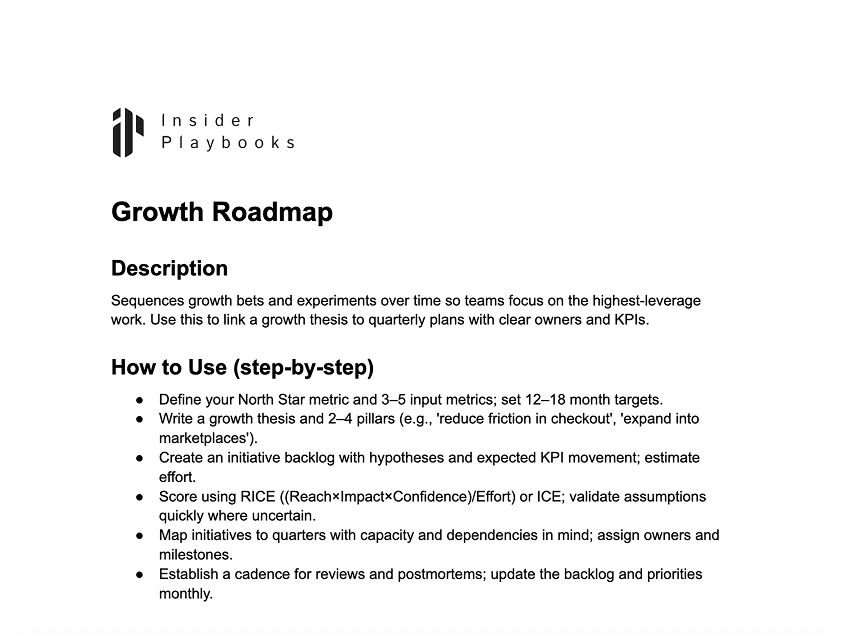
Sequences growth bets and experiments over time so teams focus on the highest-leverage work. Use this to link a growth thesis to quarterly plans with clear owners and KPIs.
View Template
Marketing & Growth Strategy
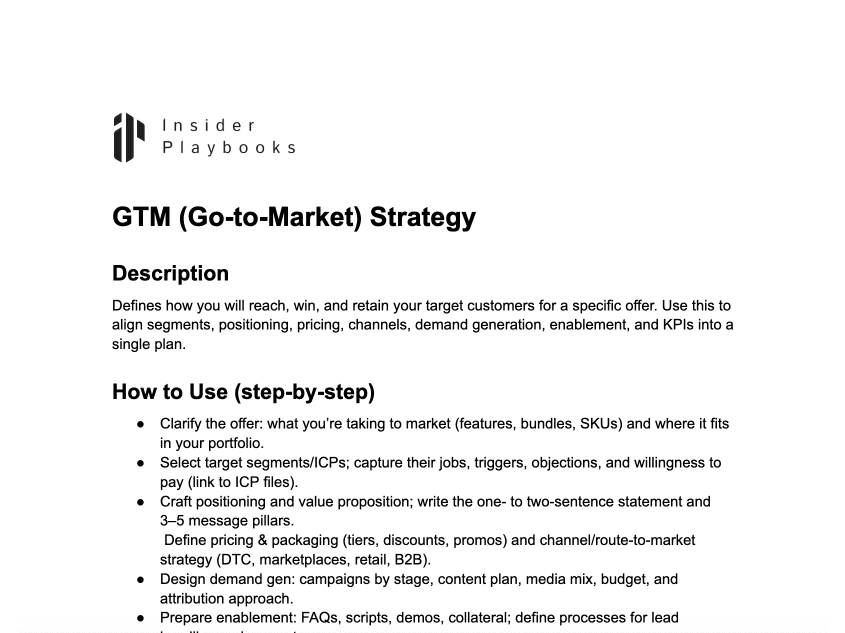
Defines how you will reach, win, and retain your target customers for a specific offer. Use this to align segments, positioning, pricing, channels, demand generation, enablement, and KPIs into a single plan.
View Template
Marketing & Growth Strategy
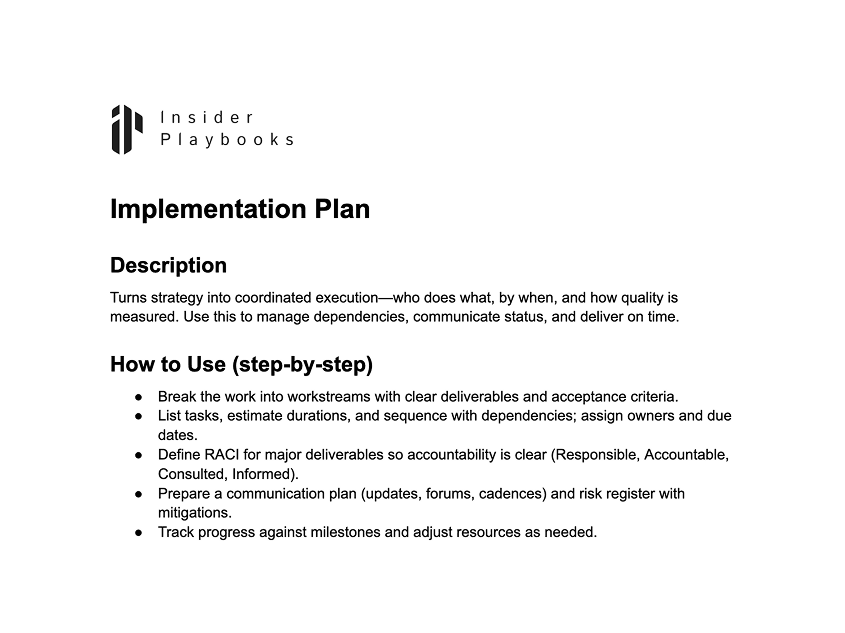
Turns strategy into coordinated execution—who does what, by when, and how quality is measured. Use this to manage dependencies, communicate status, and deliver on time.
View Template